
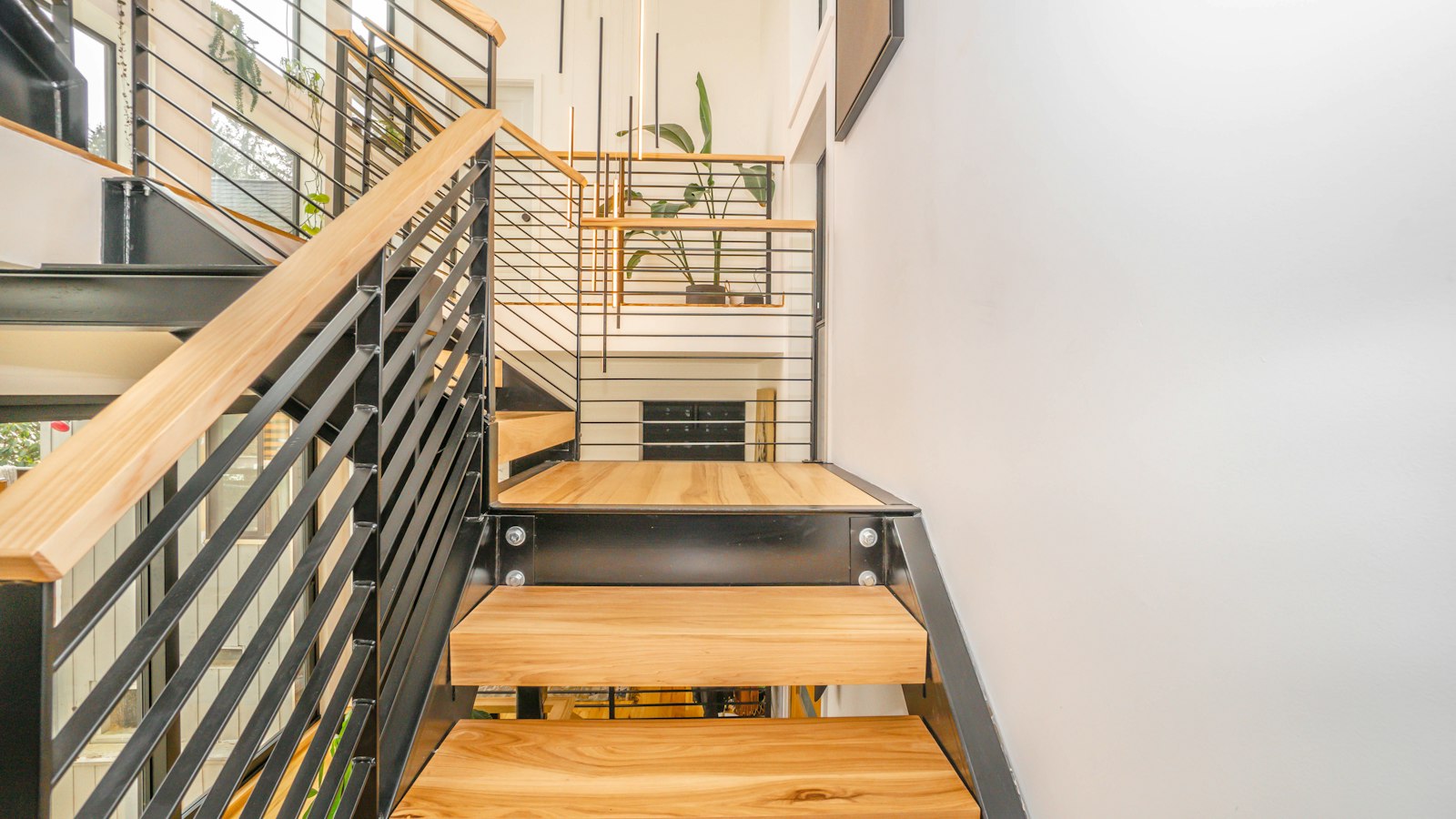
The minimum stair tread depth is 10 inches under the model IRC, measured nosing to nosing rather than across the board. States amend it: Michigan allows 9. What the figure actually controls is not comfort so much as floor space, because every inch you add to the tread adds a foot of run to a twelve tread flight.
How stair tread depth is measured: nosing to nosing
Tread depth is measured from the leading edge of one tread to the leading edge of the next. The nosing that overhangs the riser below is not part of it, which catches people out when they measure a board instead of a stair. A 2x12 cut to 11.25 inches with a 1 inch nosing gives a 10.25 inch tread, not 11.25.
The IRC wants that nosing to be between 3/4 and 1.25 inches where the tread is less than 11 inches deep, and lets you leave it off entirely once the tread reaches 11. That is the trade being made: a deeper tread does not need an overhang to give the foot somewhere to land.
What an inch of tread costs in floor space
On a 108 inch rise, the flight has 14 risers and 13 treads whatever you choose, so the tread depth multiplies straight into the run:
- 10 in tread: 130 in of run, 10 ft 10 in
- 10.5 in: 136.5 in, 11 ft 5 in
- 11 in: 143 in, 11 ft 11 in
An inch of tread is thirteen inches of hallway. That is the whole argument for the minimum: not that a 10 inch tread is pleasant, but that a deeper one has to come out of a room.
See what a tread change does to your run
Deeper treads make a shallower stair
Tread and riser move together in the pitch. A 7.71 inch riser on a 10 inch tread is a 37.6 degree stair; put the same riser on an 11 inch tread and it drops to 35 degrees. The old carpentry rule, twice the riser plus the tread landing between 24 and 25 inches, is a way of saying the same thing: as the tread gets deeper the riser should come down to match.
Where the two do not move together is where stairs get unpleasant. A 7.75 riser on a 10 inch tread is legal in most of the country and sits right at the edge of both old rules, which is why a flight built to the exact maximum often feels steeper than the one next door.
Frequently asked
Ten inches under the model IRC, measured from the leading edge of one tread to the leading edge of the next. Some states amend it, and Michigan allows nine.
No. Tread depth is measured nosing to nosing, so the overhang is not counted. A 2x12 cut to 11.25 inches with a 1 inch nosing is a 10.25 inch tread.
One inch per tread, multiplied by the number of treads. On a 14 riser flight that is 13 extra inches of run for each inch you add to the tread.