
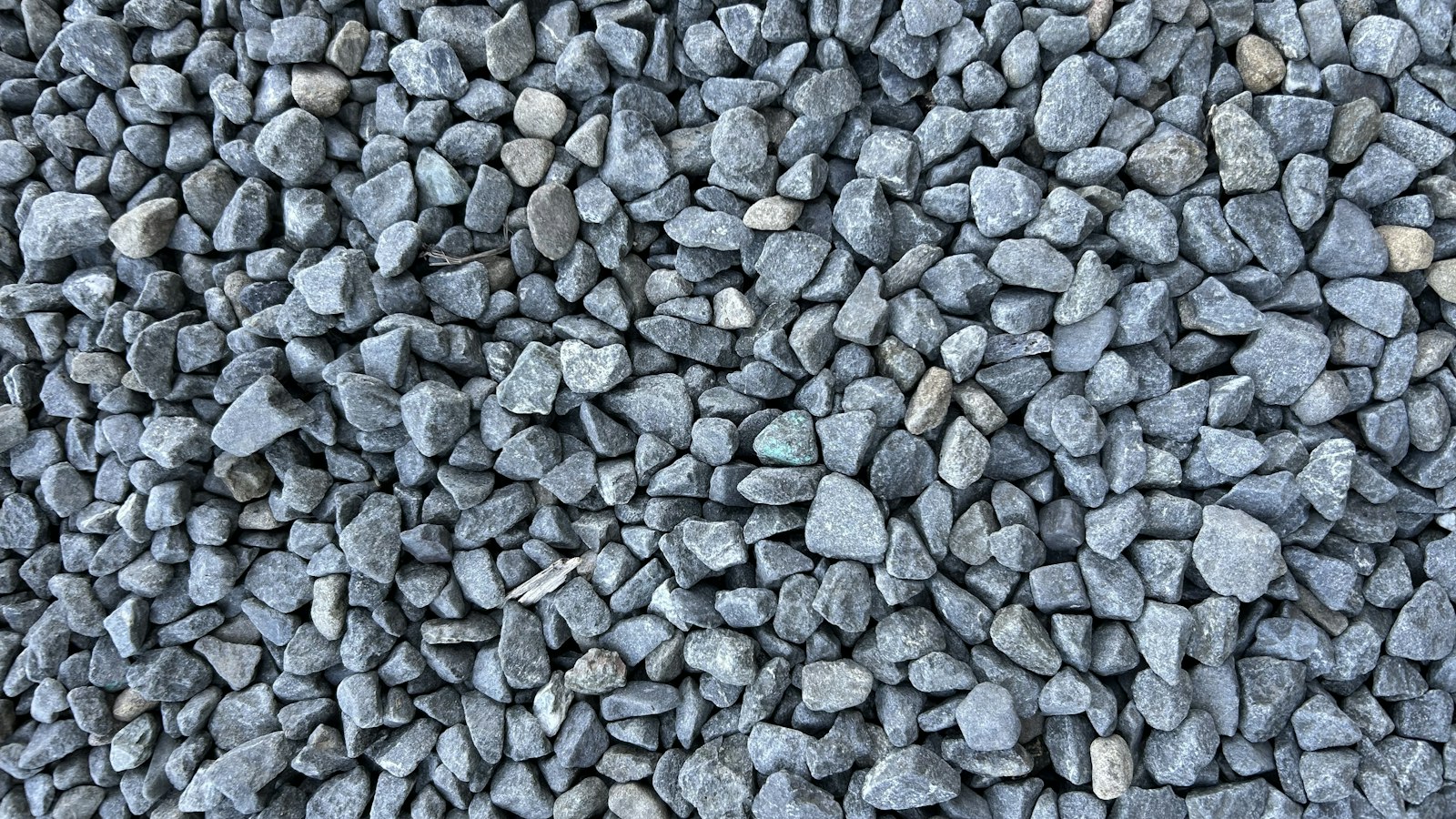
How much paver base you need on a 200 square foot patio is about 2.96 cubic yards of loose crushed stone for a 4 inch compacted base, which is roughly 4.4 tons. Two things in that sentence trip people up, and they compound: the depth in the specification is what is left after the compactor has been over it, and the yard sells you what goes in the truck.
Four inches, six for a driveway
The Interlocking Concrete Pavement Institute sets the depths, and its Tech Spec 2 is careful to say what they measure. Sidewalks, patios and pedestrian areas want a “minimum base thickness (after compaction) of 4 in. over well-drained soils.” Residential driveways want “at least 6 in.” Residential streets go to 8 to 10 inches.
Two conditions in that sentence carry weight. After compaction is the whole of the ordering problem, and it is dealt with below. Over well-drained soils is the caveat that gets ignored: on clay, on ground that stays wet, or anywhere with a real freeze-thaw cycle, both figures go up by another 2 to 4 inches. The base is the part of the construction that carries the load and spreads it. Pavers are the wearing surface and the sand is a setting bed; neither contributes strength, so a base built thin cannot be rescued by anything laid on top of it.
The specification is compacted, the delivery is loose
Crushed stone loses roughly a fifth of its volume under a plate compactor. Spread 80 cubic feet and you finish with about 67. That gap is not waste and it is not an allowance for mistakes, it is the material densifying into the shape it is supposed to hold, and it has to be bought.
So the arithmetic runs in the opposite direction from how the job is described. You are given a finished depth and you have to order the loose volume that will compact down to it, which is the finished volume times about 1.2. Order to the finished depth instead and you will be a fifth short, which on a patio shows up as the last few square yards having no base under them at all.
Tons or yards, and the conversion that goes wrong
A quarry quotes by the ton. A landscape yard quotes by the cubic yard. The two are not comparable until you convert, and converting needs a density, which is where the second mistake lives.
Crushed stone has two densities, and they differ by the same fifth as the volume. Caltrans lists crushed gravel at 2,700 pounds per cubic yard loose measure, which is 100 pounds per cubic foot, and the Federal Highway Administration puts dry gravel at the same figure in its loose column. Compacted in place it runs a great deal heavier. A dense-graded base with fines sits above clean gravel at both ends.
Use the compacted density against a loose volume and you overstate the order by about a fifth, because you have applied the compaction twice: once to the volume and again to the weight. Caltrans sidesteps it with a working conversion for aggregate of 1.5 tons to the cubic yard, which is 111 pounds per cubic foot. That is the figure to order against.
Tons of base to order
area × ( depth in inches ÷ 12 ) × 1.2 ÷ 27 × 1.5
Depth is the compacted depth. The 1.2 converts it to loose volume, the 27 turns cubic feet into cubic yards, and the 1.5 is tons per loose cubic yard. Drop the last step if your supplier sells by the yard.
On the 200 square foot patio that is 200 × 0.333 × 1.2, or 80 cubic feet, which is 2.96 cubic yards and 4.44 tons. Working it the other way, from 110 pounds a cubic foot, gives 4.40. Two routes, a rounding apart, which is the check worth doing before a delivery rather than after it.
How much paver base you need per ton delivered
A ton is about 18 cubic feet loose, which settles to roughly 15 in place. Divide that by the depth and you get the only figure you need at the counter:
| Compacted depth | Square feet per ton | Typical use |
|---|---|---|
| 4 in | 45 sq ft | Patios, walkways, pedestrian |
| 6 in | 30 sq ft | Residential driveways |
| 8 in | 23 sq ft | Cold climates, weak soil |
| 10 in | 18 sq ft | Residential streets |
The patio at 45 square feet a ton comes out at 4.4 tons, which is where the headline figure comes from. Take the same 200 square feet to driveway depth and it is 6.6 tons. Two more inches is half as much stone again, which is the part people underestimate: going from 4 to 6 is a 50 percent increase, and it sounds like a detail.
It goes down in lifts, not in one load
A plate compactor only densifies so far down. ICPI is specific: spread and compact the base “in 4 to 6 in. lifts using 7,000 lbf reversible plate compactors.” Six inches is the ceiling for a single pass, not a target.
That makes a patio at 4 inches one lift, a driveway at 6 inches one lift at the limit, and anything at 8 or 10 inches two lifts with a full compaction pass between them. Tip the whole driveway base in at once and the top three inches will look immaculate while the bottom three stay loose, which is the layer actually carrying the load. It will settle, and it will settle unevenly, and by then the pavers are on it.
This also changes how the delivery should arrive on a deep job. Two lifts means two spreads, so there is no advantage to having all of it dumped in one pile at the far end of the drive.
Paver base, crusher run, road base, and what not to buy
The material goes by different names in different regions and mostly means the same thing: a dense-graded crushed aggregate running from about 3/4 inch down to dust. Crusher run, road base, dense-grade, GAB, 21A, Class 2. The fines matter as much as the stone, because they fill the voids and let the whole thing lock up.
What makes it work is that the particles are angular. Crushed faces catch on each other and stay caught, which is what compaction is doing. Rounded stone cannot do that. Pea gravel is the classic wrong purchase here: it looks like the right material, it is cheaper, and it will not compact at any effort, because round stones roll past each other instead of interlocking. A base of pea gravel keeps moving for as long as the patio exists.
The bedding sand is a separate order
The inch of sand the pavers sit in is a different product bought separately: concrete sand, screeded to a nominal 1 inch and deliberately not compacted. ICPI calls for it “screeded to an uncompacted nominal 1 in. thickness”, and that word uncompacted is doing real work. Compact the bedding course and you lose the ability to set the pavers into it.
Because it is not compacted, it is the one layer you order at its finished depth rather than a fifth over. On the 200 square foot patio that is 16.7 cubic feet, about 0.83 tons.
Sand cannot substitute for base, and using it to make up for thin stone is the most reliable way to get a patio that settles. Sand consolidates under load and the surface follows it down. Joint sand, swept into the gaps at the end, is a third product again and is not counted in either figure.
Work out your own patio
Frequently asked
About 2.96 cubic yards, or 4.4 tons, for a 4 inch compacted base. That is 80 cubic feet of loose stone which finishes at roughly 67 in place, because crushed stone loses about a fifth of its volume under a compactor. Order the loose figure, not the finished depth.
ICPI Tech Spec 2 puts patios, walkways and pedestrian areas at a minimum of 4 inches after compaction over well drained soils, residential driveways at 6 inches, and residential streets at 8 to 10. Cold climates, clay, or ground that stays wet add another 2 to 4 inches to whichever applies.
About 45 square feet at 4 inches compacted, 30 at 6 inches, 23 at 8 and 18 at 10. A ton is roughly 18 cubic feet loose, which settles to about 15 in place, so the coverage is that figure divided by the depth in feet.
Whichever your supplier quotes, but convert carefully. Caltrans works to 1.5 tons per cubic yard for aggregate, and lists crushed gravel at 2,700 pounds per cubic yard loose. The common mistake is applying a compacted density to a loose volume, which counts the compaction twice and overstates the order by about a fifth.
No. Paver base works because the particles are angular and lock against each other under compaction. Pea gravel is rounded, so the stones roll past one another instead of interlocking and it will not compact at any effort. What you want is a dense graded crushed aggregate, sold as crusher run, road base, GAB or Class 2 depending on where you are.