
Cutting stair stringers is four decisions and one saw. Work out the riser height and the tread depth first, mark them with a framing square, cut the notches, then drop the bottom of the stringer by the thickness of one tread. That last step is the one people skip, and it is why the first step ends up taller than the rest.
Before you cut stair stringers, get the numbers
A stringer is laid out from two figures: the riser height and the tread depth. On a 108 inch rise with a 7.75 inch limit that is 14 risers at 7.71 inches, 13 treads at 10, a total run of 130 inches, and a board length of 169 inches, which means 16 foot stock. Mark all fourteen notches from the same pair of numbers, not by measuring up from the last one, because a sixteenth of an inch repeated fourteen times is most of an inch of error.
Work out your rise and run first
Why the bottom gets cut short
Every step in the finished stair is a riser cut plus the tread that sits on top of it. That is true of every step except the first, because the bottom of the stringer rests directly on the pad with no tread underneath. Cut all fourteen notches the same and the first step comes out one tread thickness taller than the other thirteen, which is exactly the uniformity failure the code cares about.
The drop
bottom riser cut = riser height − tread thickness
On a 7.71 in riser with 1.5 in treads, the bottom notch is cut at 6.21 in
The same logic applies at the top. If the stringer hangs from a rim joist, the top riser is measured to the finished floor, not to the top of the joist, and the difference is the thickness of whatever decking or flooring goes down afterwards.
The throat is why stringers are 2x12
Cutting the notches leaves a spine of wood behind them, called the throat, and that is the part carrying the load. The width of it is not the board width: it is the board width less the perpendicular distance from the notch corner to the cut line, which is the riser times the tread over the diagonal of one step.
What is left behind the notch
throat = board width − ( riser × tread ÷ step diagonal )
One 7.71 by 10 step has a 12.63 in diagonal, so the notch eats 6.11 in of board
- A 2x12 is 11.25 inches wide, so it keeps 5.14 inches of throat
- A 2x10 is 9.25 inches wide, and keeps 3.14 inches
- Cut a shallower tread and the notch eats less, but the run gets shorter and the stair gets steeper
That arithmetic is the whole reason stair stringers are specified in 2x12 and why a 2x10 is not simply a cheaper option. Ask your inspector what throat they want to see before you buy the stock, because some jurisdictions put a number on it. For outdoor stairs the American Wood Council writes it as a rule in DCA 6, its prescriptive deck guide (PDF): stringers not less than 2x12, spaced no more than 18 inches on center.
Marking with a framing square
Set the square so the riser figure sits on one leg and the tread figure on the other, clamp a pair of stair gauges there, and walk it down the board. Every notch is the same two numbers, so the gauges do the remembering. Mark the whole board before cutting anything, and check the last mark against the total run: on this stair the thirteenth tread should land at 130 inches.
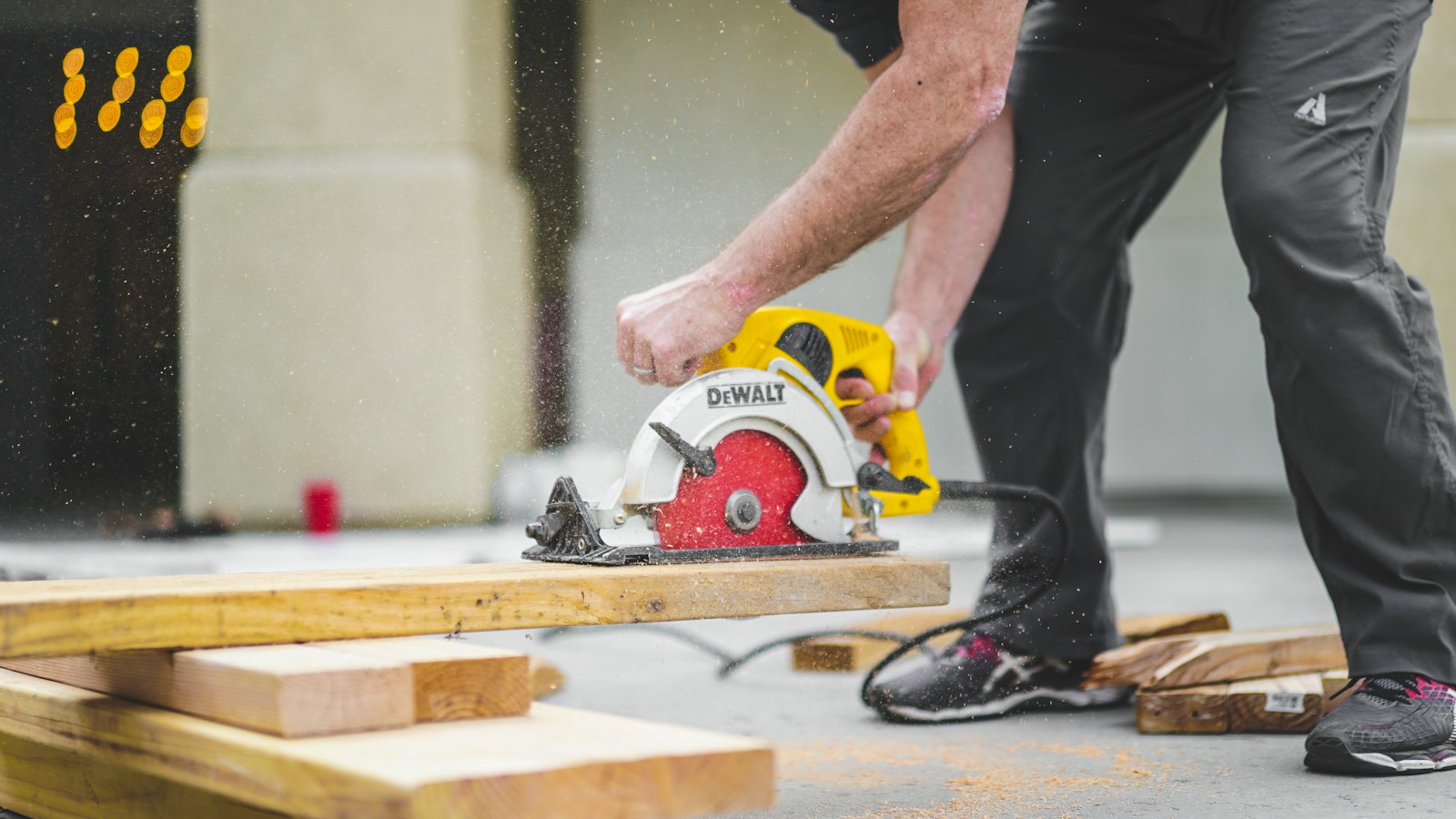
Cut the notches with a circular saw and stop at the corner, then finish the cut with a handsaw. Running the circular saw past the line to save two minutes leaves a kerf into the throat, which is the part of the board you were trying to keep.
What to check before the second stringer
- Set the cut stringer in place and check the rise at both ends, on the pad and at the rim
- Confirm the bottom step measures the same as the others once a tread is laid on it
- Use the first stringer as the template for the rest rather than remarking each board
Frequently asked
Work out the riser height and tread depth, mark every notch from those two numbers with a framing square and stair gauges, cut the notches, then cut the bottom of the stringer down by the thickness of one tread so the first step matches the rest.
Because every other step gets a tread laid on top of its riser cut and the bottom one does not. Dropping the stringer by the tread thickness, 1.5 inches for a 2x tread, makes all the steps the same height.
The notches leave much less behind. On a 7.71 by 10 stair a 2x12 keeps 5.14 inches of throat and a 2x10 keeps 3.14, which is why stringers are specified in 2x12 stock.
The diagonal of the total rise and the total run. A 108 inch rise over a 130 inch run is 169 inches, or 14.1 feet, so you buy 16 foot stock.