
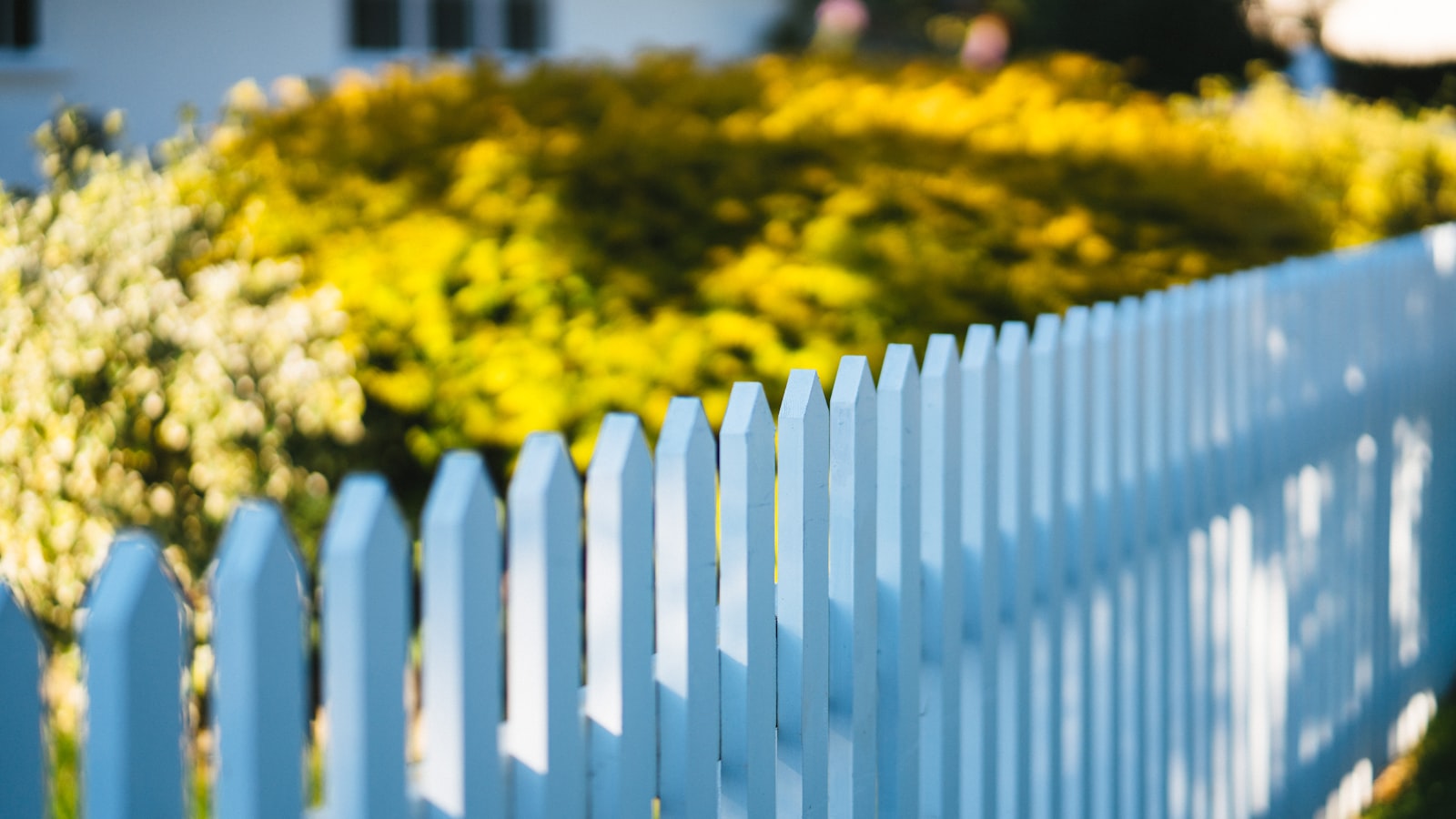
How many fence pickets you need is the fence length divided by the actual covering width of one picket, plus an allowance for waste. Run that on 100 feet laid solid with no gaps, using 1x6 boards and 10 percent, and you get 240 pickets. If you worked it out as 220 you used the nominal six inch width, and a 1x6 does not measure six inches. That mistake leaves you 20 pickets short on the last afternoon.
A 1x6 is 5.5 inches
Softwood is named for its rough sawn size and sold at its planed size, so every dimension is smaller than the label. A 1x6 finishes at five and a half inches wide, and across a hundred feet that half inch compounds hard. This is not a supplier quirk: the American Softwood Lumber Standard, PS 20, sets the dressed dry size of a nominal 1x6 at 3/4 by 5 1/2 inches.
- At the nominal 6 inches: 220 pickets
- At the actual 5.5 inches: 240 pickets
- A 1x4, actually 3.5 inches: 378 pickets
- A 1x8, actually 7.25 inches: 183 pickets
Pickets for a solid fence
pickets = fence length in inches ÷ ( picket width + gap ) × ( 1 + waste )
1,200 inches ÷ 5.5 = 218.2 boards of coverage, plus 10 percent, rounded up once, is 240
The same trap runs through the whole build
It is not only pickets. A 2x4 rail is 1.5 by 3.5 inches, a 4x4 post is 3.5 square, and a 6x6 is 5.5. Every one of those matters somewhere: post size decides how much concrete a hole takes, rail thickness decides your fastener length. Reading the label as a measurement is the single most reliable way to be wrong about a lumber order.
Measure a picket before ordering hundreds
Widths vary a little between suppliers and between profiles, and dog-ear or gothic pickets are not always the same width as square-topped ones. On a run this size a quarter inch of difference is another ten boards, so it is worth measuring one rather than assuming 5.5.
The gap changes how many fence pickets you need
A solid privacy fence has no gap. A picket or spaced fence does, and every fraction of an inch you leave removes boards from the order.
- No gap, solid: 240 pickets
- 1/4 inch: 230
- 1/2 inch: 220
- 1 inch: 204
- 2 inches: 176
- 4 inches: 139
Notice the half inch gap gives 220, the same as the nominal width with no gap. So someone who used the wrong width and also planned a half inch gap lands on the right number by accident, for two wrong reasons that cancel. Change either one and the order is wrong again, which is why it is worth doing properly rather than trusting a figure that happened to work last time.
A small gap is worth having on a solid fence anyway. Pressure treated boards arrive wet and shrink as they dry, so pickets butted tight in spring open up by fall regardless. Fitting them tight is a decision to accept whatever gap the timber chooses.
The rest of the fence
Pickets are one line. A 100 foot fence at 8 foot post spacing also needs:
- 14 posts, forming 13 sections
- 39 rails, at 3 per section
- 28 bags of concrete, at 2 a post
- Total around $1,428, which is $14.29 a foot
Note the actual post spacing comes out at 7.69 feet, not 8. A hundred feet does not divide evenly by eight, so the sections are distributed evenly rather than leaving a stub at the end. That is what you want, and it is worth knowing before you set the first post from a tape measure at exactly eight foot intervals.
Post spacing is where the money is
Pickets scale with length and cannot be avoided. Posts and concrete are a choice.
- 6 foot spacing: 18 posts, 17 sections, 36 bags, $1,582
- 7 foot: 16 posts, 32 bags, $1,503
- 8 foot: 14 posts, 28 bags, $1,425
- Wider than 8 foot: not on the calculator, because rails come in 8 foot stock
Between six and eight foot spacing there is $157 on a hundred foot run, and it is a genuine trade rather than free money. Closer posts make a stiffer fence that copes better with wind and with rails that will sag over time. Eight feet is the common compromise for a reason, and windy sites are where six earns its cost.
Longer fences cost less per foot
End posts are a fixed overhead spread across whatever you build, so the per-foot price falls as the run gets longer.
- 50 feet: 120 pickets, 8 posts, $739, $14.79 a foot
- 100 feet: 240 pickets, 14 posts, $1,425, $14.25
- 150 feet: 360 pickets, 20 posts, $2,110, $14.07
- 200 feet: 480 pickets, 26 posts, $2,796, $13.98
Not a large effect, and worth knowing when a supplier quotes a per-foot price for a short run and you compare it against a neighbour’s longer one.
Gates are a separate problem
None of the figures above include a gate, and a gate is not simply a section of fence that opens.
The posts either side carry a swinging load rather than a static one, so they want to be larger, set deeper and given more concrete than the run posts. The gate itself needs its own frame, a diagonal brace to stop it sagging, hinges and a latch. And the opening has to be measured to the finished gate plus clearance, not to the nominal width, or it will bind the first time the timber swells.
Subtract the gate opening from the fence length before counting pickets, then add the gate as its own small build. Counting it as ordinary fence gets both the picket count and the post count wrong.
What the allowance covers
Ten percent on the pickets is 22 boards on this fence, taking 218.2 up to 240. That covers splits, warped boards you reject at the yard, and the cuts at gates and corners.
- 0 percent: 219 pickets, and no margin at all
- 5 percent: 230
- 10 percent: 240
- 15 percent: 251
Fence boards are worth over-ordering slightly more than most materials, because a run of pickets has to match. Boards from a second delivery weeks later can differ in color and in how wet they are, and both show.
The fence calculator takes the length, the picket width, the gap and the post spacing and returns everything together. The post hole concrete calculator works out the concrete in more detail, and the deck calculator handles a matching deck where the same nominal-against-actual trap applies to the boards.
Work out your own fence
Frequently asked
240 pickets of 1x6 laid solid with a 10 percent allowance. The common mistake is using the nominal six inch width, which gives 220 and leaves you 20 boards short, because a 1x6 actually measures 5.5 inches.
5.5 inches. Softwood is named for its rough sawn size and sold planed, so every dimension is smaller than the label. A 1x4 is 3.5 inches and a 1x8 is 7.25.
A lot. On a 100 foot fence with 5.5 inch pickets it is 240 boards solid, 230 at a quarter inch gap, 220 at a half inch, 204 at one inch and 139 at four inches.
14 posts at 8 foot spacing, forming 13 sections, plus 39 rails and about 28 bags of concrete. The actual spacing works out at 7.69 feet, since 100 does not divide evenly by 8.
A small one is sensible. Pressure treated boards arrive wet and shrink as they dry, so pickets butted tight will open up anyway. Fitting them tight means accepting whatever gap the timber decides on.